

Advanced Computerized Bamboo Tabletop Production Facility
May 28, 2026, 8:30 AM
Manufacturing commercial-grade solid bamboo worksurfaces demands a level of structural accuracy that traditional woodworking equipment cannot support. Because engineered industrial bamboo exhibits high fiber density and complex multi-ply cross-laminations, transforming raw blanks into retail-ready desktop surfaces requires a heavily automated machinery infrastructure. Our manufacturing plant operates a newly installed suite of specialized, computer numerical control (CNC) machinery lines. This advanced technological layout ensures micro-millimeter cutting accuracy, flawless surface calibrations, and repeatable structural drilling tolerances across high-volume production operations.
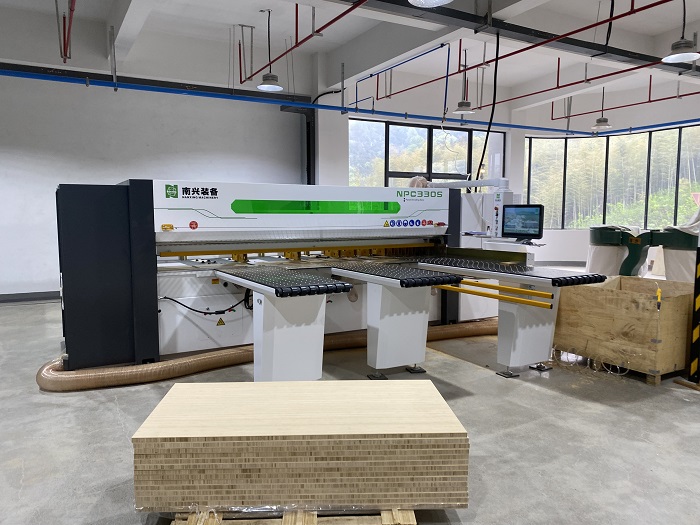
1. Nanxing Machinery NPC330S — Computer Panel Saw
Primary Function
High-precision primary sizing, straight-line rip cutting, and linear dimensioning of raw multi-ply bamboo architectural slabs.
Operational Mechanics
Large-format structural bamboo sheets are transferred directly onto the heavy-duty front air-cushion tables. The integrated flotation system utilizes tiny, pressurized air holes to create a near-frictionless workspace, allowing operators to position thick panels without physical strain. The computerized control console activates heavy pneumatic grippers that draw the raw bamboo substrate into the internal chamber. A high-speed, automated traveling saw carriage executes smooth, chip-free cuts along the programmed horizontal axes.
Core Manufacturing Advantages
- Maximized Material Yield: Optimizes raw material layouts automatically via software to minimize structural drop-off and industrial waste.
- Flawless Geometric Squareness: Ensures that every initial desktop blank is cut perfectly square to a fraction of a millimeter, preventing cumulative alignment errors in subsequent production steps.
- Operator Safety and Efficiency: Replaces traditional, high-risk manual table saw feeding with a fully enclosed, automated material processing track.
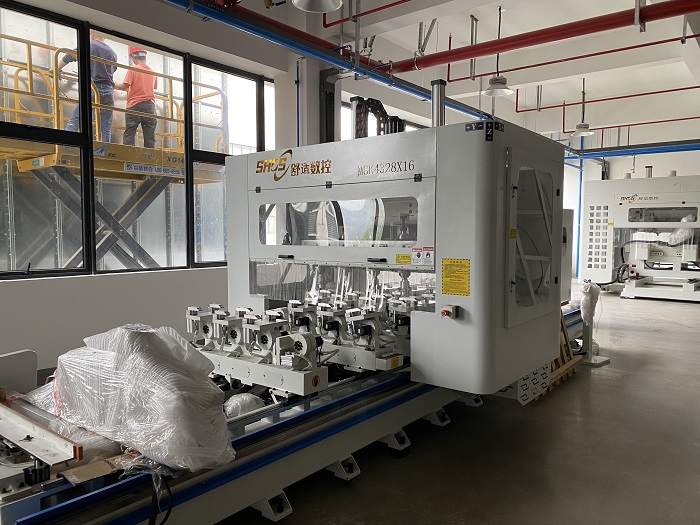
2. Shunda CNC MSK721R9-8A — Multi-Axis Heavy-Duty Machining Center
Primary Function
Complex geometric perimeter shaping, precise edge profiling, corner radiusing, and specialized multi-axis edge milling.
Operational Mechanics
This fully enclosed industrial workstation serves as the primary shaping hub for custom desktop designs. A sized bamboo blank is secured to the internal machine bed using a powerful matrix of adjustable vacuum pods. The computerized system directs a multi-axis, high-torque spindle assembly that glides smoothly around the perimeter of the dense material. An automated tool changer swaps out carbide router bits on the fly to seamlessly transition from cutting external shapes to engraving clean profiles.
Core Manufacturing Advantages
- Ergonomic Profile Capabilities: Carves premium architectural edge profiles with high consistency, including deep bevels, clean chamfers, sweeps, and smooth knife-edges.
- Integrated Dust Containment: The heavy-duty structural enclosure works directly with the facility central vacuum lines to capture dense bamboo dust at the source, ensuring a cleaner workspace.
- Zero Defect Edge Quality: Eliminates the standard grain splintering and micro-tearing caused by manual hand routers on dense vertical or strand-woven bamboo materials.
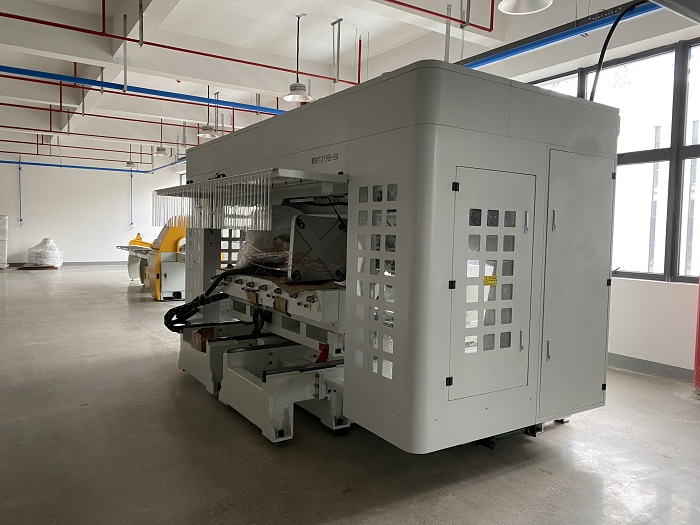
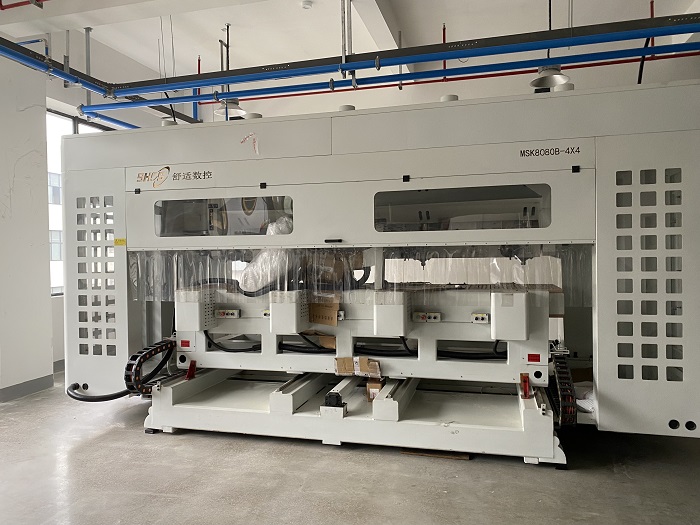
3. Shunda CNC MSK8080B-4X4 — Dual-Zone CNC Router and Boring Center
Primary Function
Large-format underside structural milling, recessed wire management carving, and high-volume point-to-point blind boring.
Operational Mechanics
Featuring a split-bed, dual-zone layout, this heavy machining center specializes in processing the structural undersides of premium desks. The bamboo tabletop is laid flat, face down, onto an expansive grid of vacuum rails. Independent machining heads execute precise drilling and routing programs across the expansive surface. The machine uses a synchronized electronic grid to guide deep milling tools with high precision.
Core Manufacturing Advantages
- Continuous Pendulum Processing: Enables non-stop factory throughput by allowing operators to safely unload and reload raw panels in one zone while the active spindle head cuts in the adjacent zone.
- Under-Desk Structural Optimization: Carves dedicated recessed structural tracks for metal stabilization beams, undermount wire trays, and custom wire management boxes.
- High-Density Mechanical Pre-Drilling: Machines high-tolerance anchoring points into the dense fibers, preventing structural splitting when end consumers mount heavy accessories.
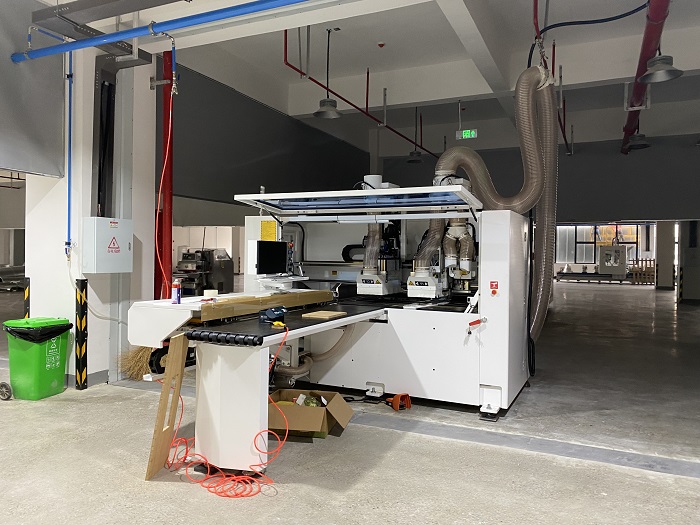
4. Automatic Through-Feed Multi-Spindle Boring Line
Primary Function
High-volume, rapid automated point-to-point drilling of under-desk hardware pilot holes and structural alignment bores.
Operational Mechanics
This automated inline machine uses a heavy-duty, through-feed conveyor system. As a sized bamboo tabletop moves along the automated line, optical sensors register the panel edges to confirm its position. An array of independent vertical and horizontal drill spindles descends simultaneously. This allows the machine to bore multiple precisely grouped mounting points in a single, swift cycle.
Core Manufacturing Advantages
- Guaranteed Assembly Alignment: Ensures that pre-drilled holes match the mounting brackets of motorized sit-stand frames perfectly, eliminating installation issues for the end user.
- Rapid Production Cycles: Completes complex, multi-point underside drilling maps in seconds, far outperforming standard single-spindle machinery lines.
- Variable Depth Control: Computers monitor drilling depths accurately down to a fraction of a millimeter, ensuring clean, deep pilot holes without risking any face-layer punctures.
5. Heavy-Duty Wide-Belt Calibrating and Finish Sanding Machine
Primary Function
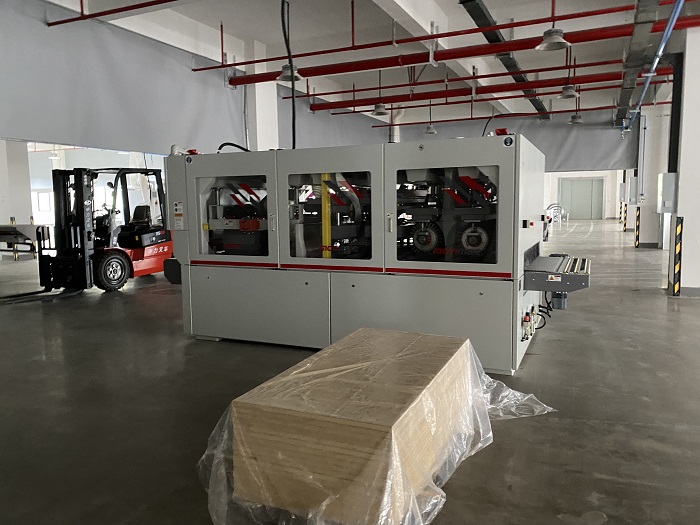
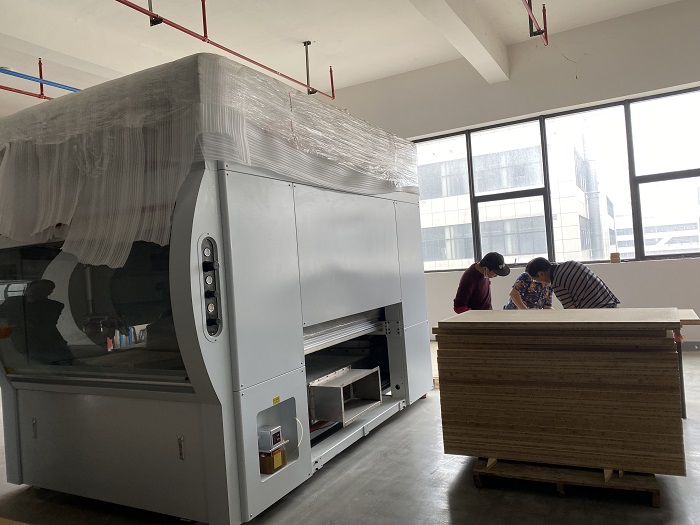
Mechanical thickness calibration, structural leveling, and micro-fine surface preparation across wide laminated panels.
Operational Mechanics
Laminated bamboo slabs are drawn into the wide feed path by high-traction conveyor tracks. The panels pass directly underneath a sequence of heavy, pressure-regulated sanding drums equipped with industrial abrasive belts. The initial heavy-grit drums focus on "calibrating"—grinding away micro-variations from lamination to ensure uniform sheet thickness. The secondary fine-grit heads then remove tiny surface imperfections, leaving the board smooth and ready for sealing.
Core Manufacturing Advantages
- Perfect Surface Planarization: Flattens minor seams, glue lines, and natural variations across raw planks to deliver a smooth surface.
- Optimal Coating Adhesion: Creates a uniform, lint-free grain texture that lets oils, lacquers, and finishes bond cleanly without pooling or showing blemishes.
- High-Precision Electronic Tracking: Automated sensing arrays adjust pressure settings dynamically to prevent edge snipe or over-sanding along thin perimeter zones.
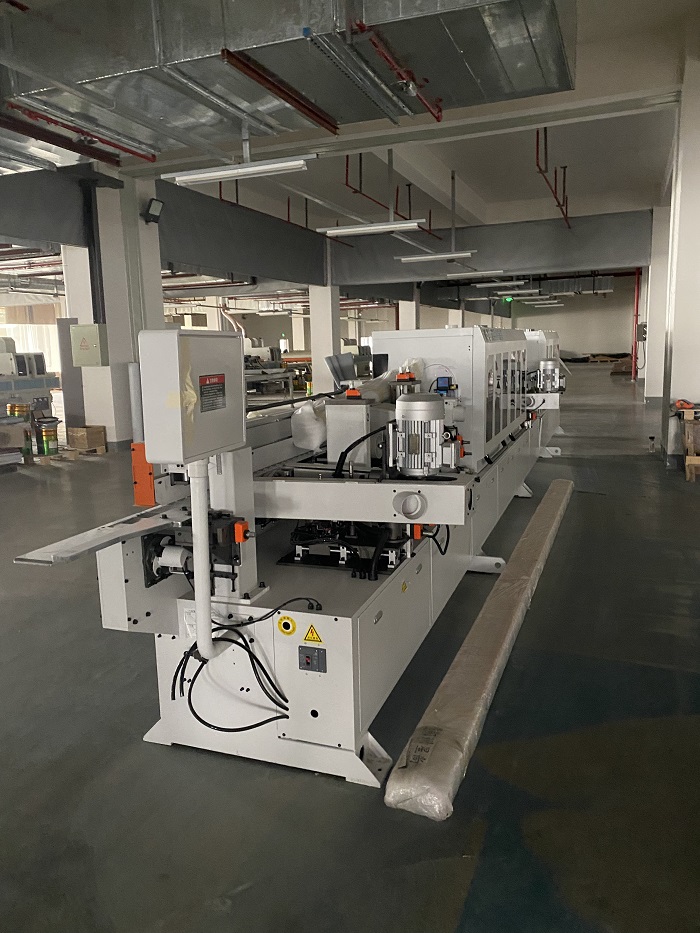
6. Automated Linear Edge-Trimming and Profile Refining Unit
Primary Function
Continuous linear edge processing, micro-shaving, and mechanical corner-breaking of long bamboo slab profiles.
Operational Mechanics
As the bamboo tabletops travel along the heavy-duty tracking belt, the long edges pass through a sequence of mechanical workstations. High-rpm trimmers cut away edge imperfections, while micro-scraping blades smooth out tiny machining marks. The panel then passes through oscillating cloth buffing wheels that polish the exposed multi-layered core edges.
Core Manufacturing Advantages
- Showcasing Natural Multi-Ply Layering: Cleanly profiles and polishes the exposed edges of the board, highlighting the authentic look of the laminated bamboo layers.
- Splinter-Free Handling: Breaks sharp corners smoothly to create comfortable, user-friendly desk perimeters that prevent forearm fatigue.
- High-Speed Processing: Handles continuous linear tracking swiftly, managing edge preparation for hundreds of desktops per shift.
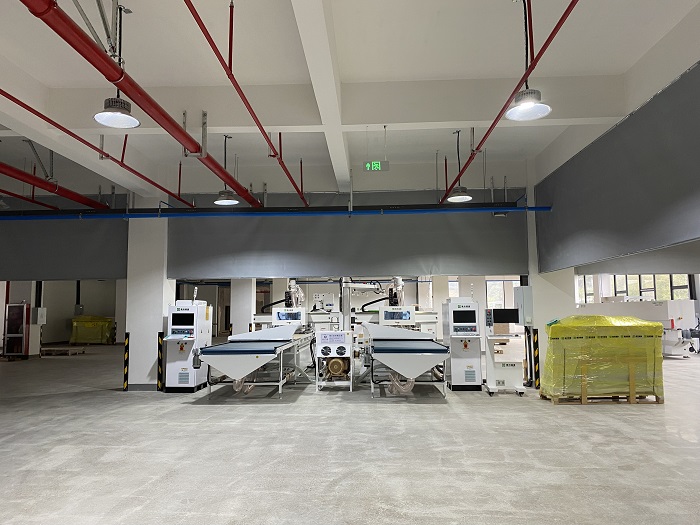
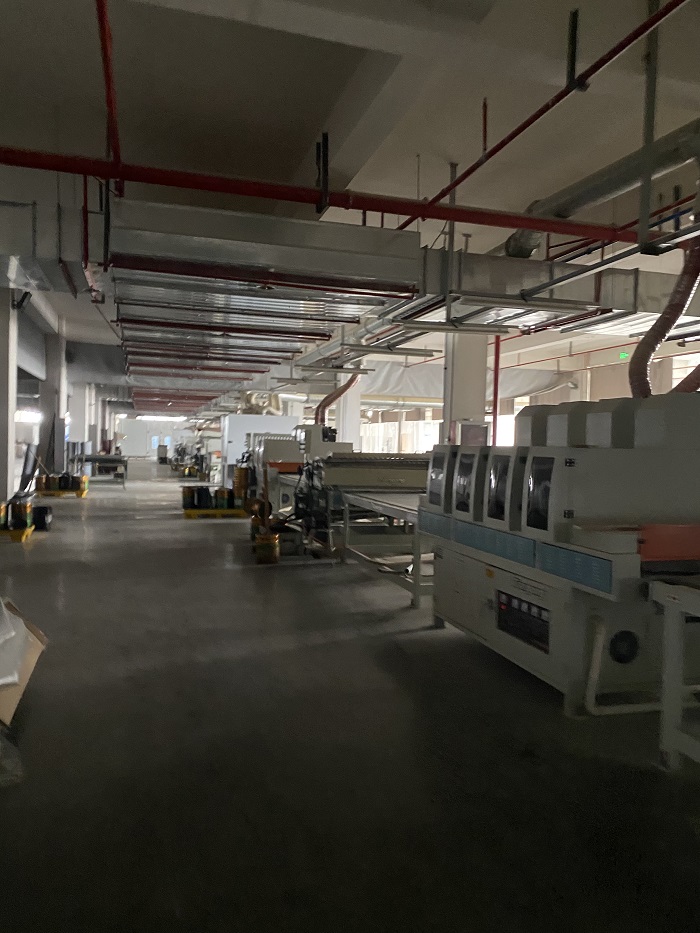
7. Automated Reciprocating Clean-Room Spray Coating Machine
Primary Function
Factory application of protective polyurethane lacquers, acrylic seals, or UV-cured topcoats within a controlled environment.
Operational Mechanics
Operating inside a sealed, pressurized clean-room chamber to prevent dust contamination, this machine features a motorized cross-axis gantry system. As a polished bamboo tabletop passes through on the conveyor system, automated spray heads sweep back and forth. This motion applies a perfectly even, misted layer of protective coating over the top face and down the detailed side edges simultaneously.
Core Manufacturing Advantages
- Flawless Protective Barriers: Delivers a highly uniform protective finish that resists daily office hazards like coffee spills, water rings, and chemical cleaners.
- Optimized Coating Efficiency: Reduces overspray and chemical waste through automated gun control, outperforming traditional open-air hand spraying.
- Consistent Film Build: Maintains thick, even protective layers across the wide surface, ensuring reliable durability across all production batches.
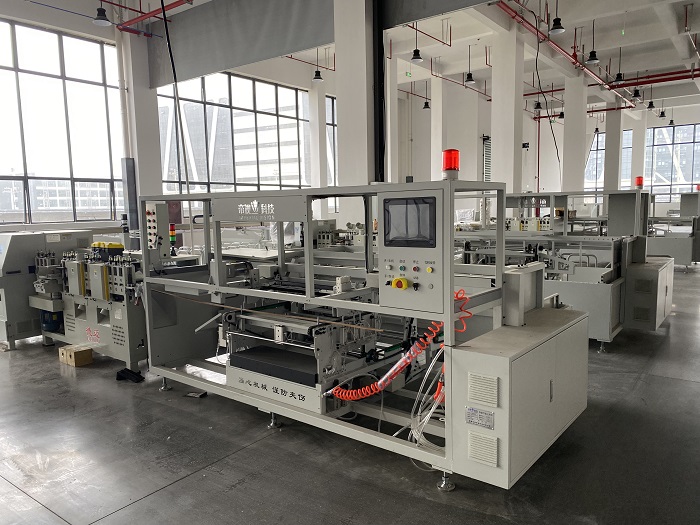
8. Imperial Vision — AI Intelligent Automated Quality Inspection System
Primary Function
Real-time optical scanning and automated defect tracking for finished, coated worksurfaces.
Operational Mechanics
The finished bamboo desktop passes along a specialized roller bed through an inspection arch. A high-resolution array of multi-angle digital cameras and laser sensors scans every millimeter of the passing top. Integrated AI software compares the scan against reference maps, checking for surface defects like micro-scratches, dust spots, or finish runs.
Core Industrial Advantages
- Objective Quality Standards: Replaces human eye fatigue with a reliable, digital quality standard, ensuring consistent grading for every shift.
- Early Sorting Detection: Identifies and marks finish issues early, allowing the line to flag pieces for touch-ups before they move to final packaging.
- Production Line Feedback: Logs defect patterns digitally, giving the factory data to help refine sanding and spray settings on earlier machines.
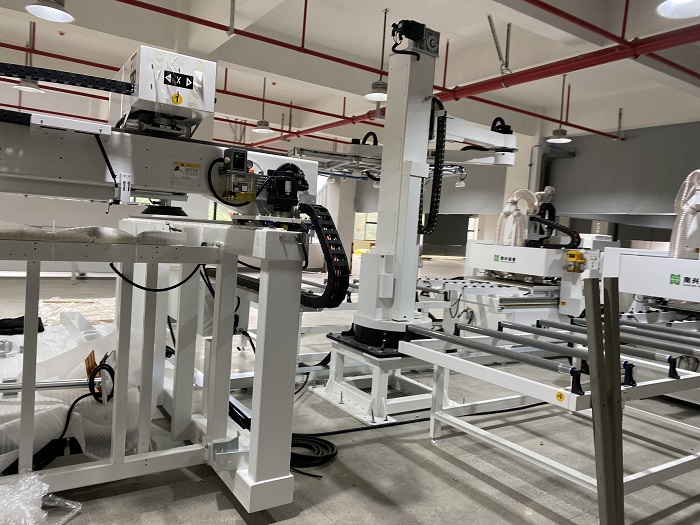
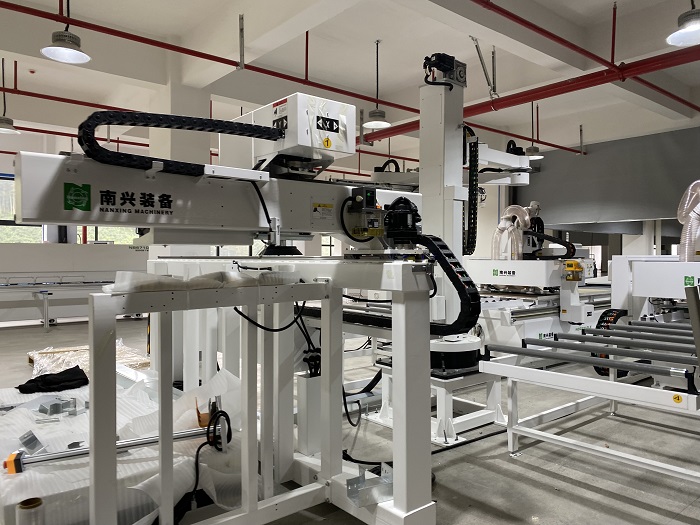
9. Nanxing Automated Robotic Gantry Transporter Cell
Primary Function
Automated vacuum lifting, overhead gantry relocation, and inline machinery transfers of heavy boards.
Operational Mechanics
This heavy material-handling cell uses a centralized vertical lifting tower paired with a horizontal gantry track. A grid of high-power vacuum suction pods drops onto a finished or raw board, establishes a secure seal, and lifts the panel. The arm lifts the panel from a processing bed, rotates it if needed, and transfers it to the next conveyor track down the line.
Core Industrial Advantages
- Hands-Free Material Logistics: Interconnects separate machine stations into a continuous production line without requiring manual forklift or cart interventions.
- Face Protection Handling: Uses clean rubber suction cups to lift heavy panels safely by the face, preventing side dents or scratches during transit.
- Continuous Line Operation: Moves panels quickly and reliably between cutting, sanding, and drilling stages, minimizing downtime across the factory floor.
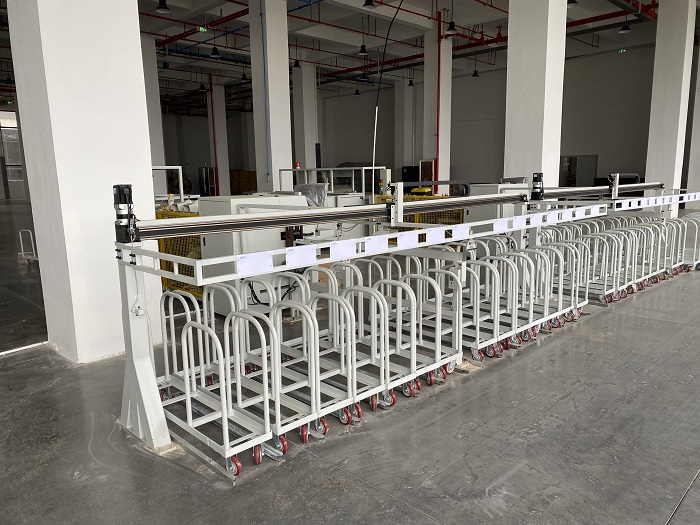
10. Automated Sorting Racks and Vertical Buffering Grid
Primary Function
Organized vertical intermediate storage, safe lacquer curing, and final packaging logistical sort staging.
Operational Mechanics
This tracking infrastructure uses modular rolling metal cart frames split into separate vertical slots. After passing automated vision checks, finished tops are held vertically in these dedicated slots. The frames keep the boards upright and separated by air gaps, ensuring they don't rub or stick while the fresh finish cures.
Core Industrial Advantages
- Floor Space Optimization: Uses vertical storage to maximize the factory floor footprint, keeping high volumes of desktops organized in a smaller area.
- Preventing Surface Blemishes: Keeps the wide faces from touching each other, protecting fresh finishes from rubbing or pressure marks before final packaging.
- Flexible Batch Sorting: Helps logistics teams group finished tabletops by order size, color, or shipping route, making final boxing faster and more organized.
 皖公网安备 34180202000049号