

Outdoor MOSO Bamboo Decking 3050mm Length For USA Market
May 28, 2026, 8:30 AM
The American outdoor living market is currently undergoing a significant shift. Homeowners and commercial developers from the coastal regions of California to the humid suburbs of the Southeast are moving away from traditional wood products in favor of high-performance, sustainable alternatives. Among these, MOSO bamboo decking has established itself as a premier contender, particularly when specified in the extra-long 3050mm (approx. 10-foot) length. This specific dimension is tailored to meet the architectural demands and aesthetic preferences prevalent in the USA building industry.
Understanding why this material has gained such traction requires looking beyond its "green" credentials. While sustainability is a major factor, the American market prioritizes structural integrity, fire safety, and ease of installation. A 3050mm strand-woven bamboo plank represents a fusion of thermal-density engineering and biological resilience, providing a decking surface that rivals, and often exceeds, the properties of high-end tropical hardwoods like Ipe or Cumaru.
The Demand for 3050mm Lengths in American Architecture
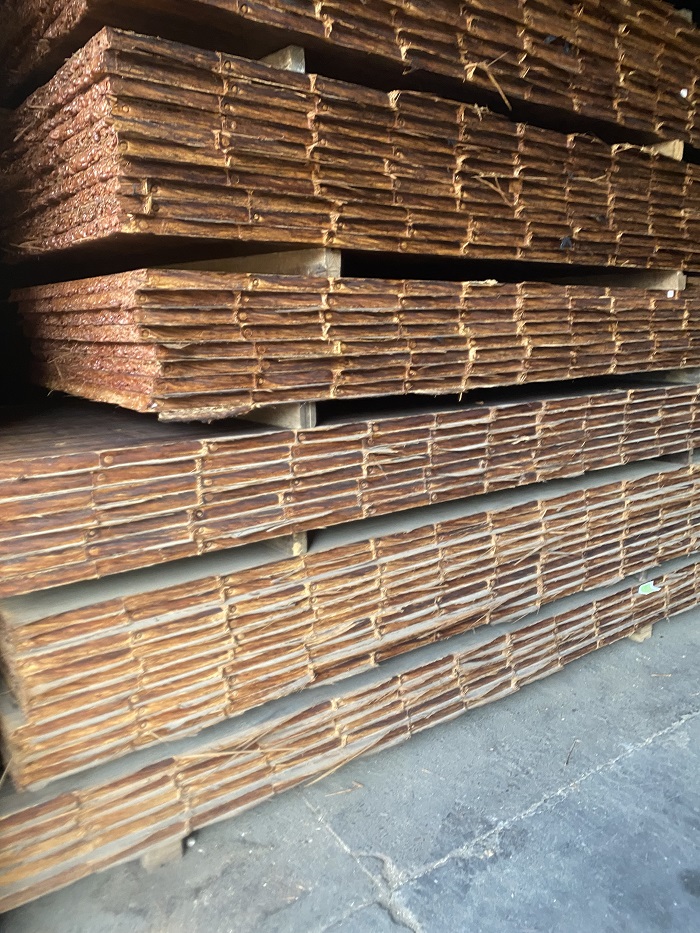
In the USA, residential decks and commercial boardwalks are often designed on a grander scale compared to European or Asian urban counterparts. The 3050mm length is particularly advantageous for the following reasons:
- Reduced Butt-Joints: Longer boards mean fewer interruptions across the visual plane. This creates a seamless, high-end look that is highly sought after in modern and minimalist American architectural styles.
- Installation Efficiency: For professional contractors in the USA, labor is often the most significant expense. Handling 10-foot boards allows crews to cover more square footage with fewer pieces, speeding up the layout and fastening process.
- Standardized Joist Compatibility: The 3050mm length aligns well with standard American joist spacing (typically 12 or 16 inches on center), ensuring that board ends meet squarely on structural supports with minimal waste.
Technical Engineering: From Grass to Heavy-Duty Decking
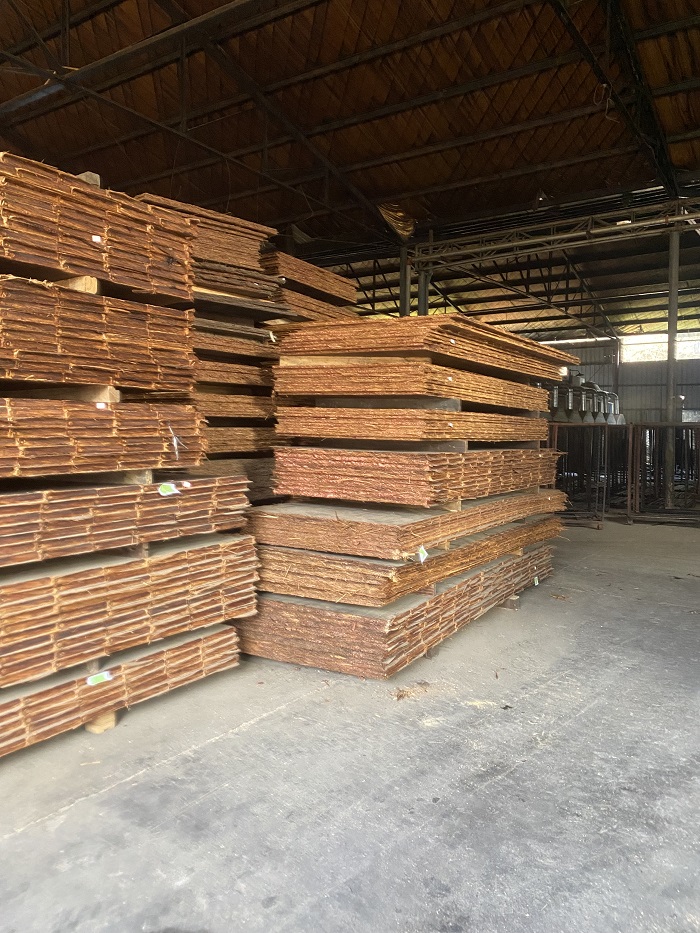
MOSO bamboo (Phyllostachys edulis) is not used in its raw form for outdoor applications. Instead, it undergoes a rigorous strand-woven process. This involves crushing the bamboo stalks into raw fibers and removing the natural sugars and starches through a high-heat carbonization process. This step is critical because it eliminates the food source for insects and fungi, making the material naturally rot-resistant.
Following carbonization, the fibers are infused with specialized resins and compressed under extreme hydraulic pressure. This creates a high-density board (approximately 1,100 to 1,200 kg/m³) that is essentially a bio-composite. For the USA market, where temperatures can range from sub-zero winters to blistering desert summers, this density provides the dimensional stability required to prevent excessive warping or checking.
Hardness and Durability Metrics
American consumers are accustomed to the durability of hardwoods. MOSO bamboo decking delivers a Janka Hardness rating of over 3,500 lbf, which is nearly three times harder than White Oak and significantly denser than Cedar. This makes it an ideal surface for high-traffic areas, pet-friendly households, and commercial spaces where furniture dragging and heavy footfall are common.
Performance in Varied USA Climates
The geography of the United States presents a unique challenge for any decking material. A product must be versatile enough to handle the dry heat of Arizona, the salt spray of Florida, and the freeze-thaw cycles of the Northeast.
High Humidity and Rainfall Resistance
In states like Louisiana or Washington, moisture is the primary cause of deck failure. Traditional wood absorbs water, causing it to swell and eventually rot. Because strand-woven bamboo is saturated with resins and compressed, it has an exceptionally low moisture absorption rate. This "closed-cell" structure prevents the internal pressure changes that lead to the delamination or cupping seen in inferior wood products.
Thermal Stability in Arid Regions
Conversely, in the Southwest, intense UV radiation and low humidity can cause wood to shrink and crack. The thermal treatment (carbonization) used in 3050mm MOSO decking effectively "pre-shrinks" the material at temperatures far higher than it will ever encounter in nature. This results in a plank that maintains its straight lines and tight gaps even under the desert sun.
The Safety Advantage: Fire Ratings and Slip Resistance
Fire safety is a major concern in the USA, particularly in Wildland-Urban Interface (WUI) zones in states like California, Colorado, and Oregon. One of the reasons architects specify MOSO bamboo is its inherent fire resistance.
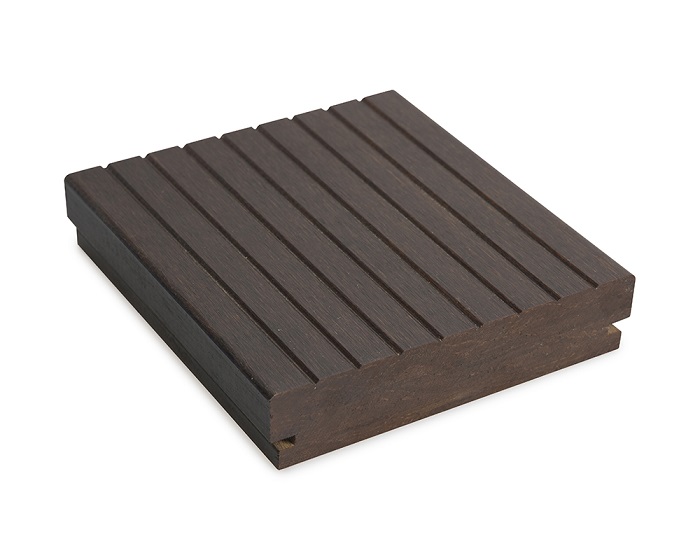
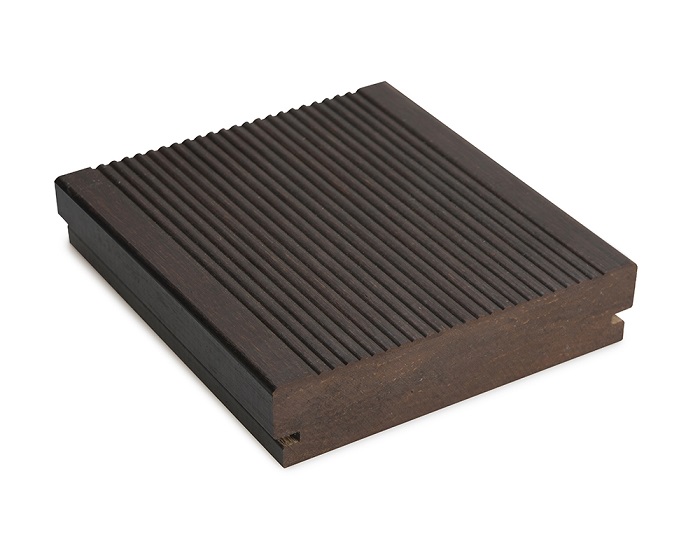
Due to its extreme density, strand-woven bamboo often achieves a Class A Fire Rating (ASTM E84). This means it spreads flame very slowly and produces minimal smoke. For many coastal and mountain developments, this rating is not just a benefit; it is a legal requirement for building permits. Additionally, the surface can be milled with a reeded or grooved profile to provide enhanced slip resistance (R10 or R11 ratings), making it safer for pool decks and public walkways.
Installation Systems: Hidden Fasteners and Tongue & Groove
The 3050mm MOSO planks for the USA market are typically milled with a side-grooved profile. This allows for the use of hidden stainless steel fasteners. In the American luxury market, visible screw heads are increasingly seen as a sign of dated construction. Hidden clips provide several benefits:
- Uniform Gapping: Clips automatically set a consistent 4-5mm gap between boards, which is essential for drainage and ventilation.
- Uninterrupted Surface: The absence of face-driven screws prevents water from pooling in screw holes, which is a common starting point for rot in wood decks.
- Ease of Replacement: Many clip systems allow for the removal of a single board without dismantling the entire deck.
Furthermore, many 3050mm planks feature End-Matching (Tongue and Groove ends). This allows installers to join boards between joists, which is a massive advantage when working with long spans. It reduces "off-cut" waste and allows for a random, staggered layout that looks natural and architectural.
Maintenance and Aesthetic Longevity
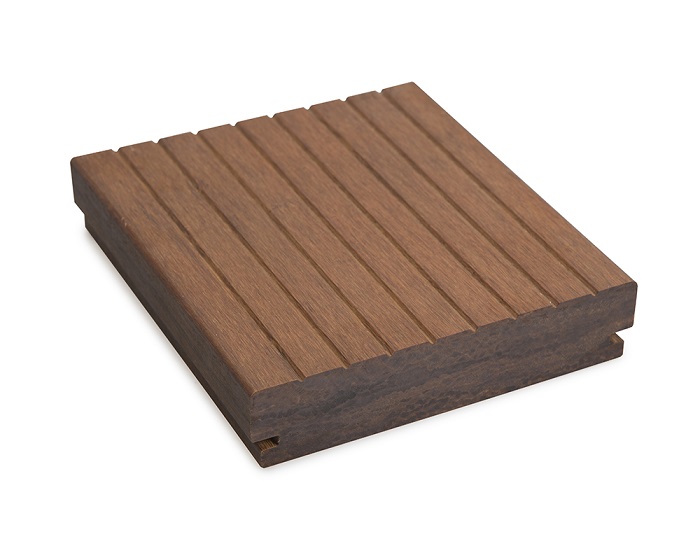
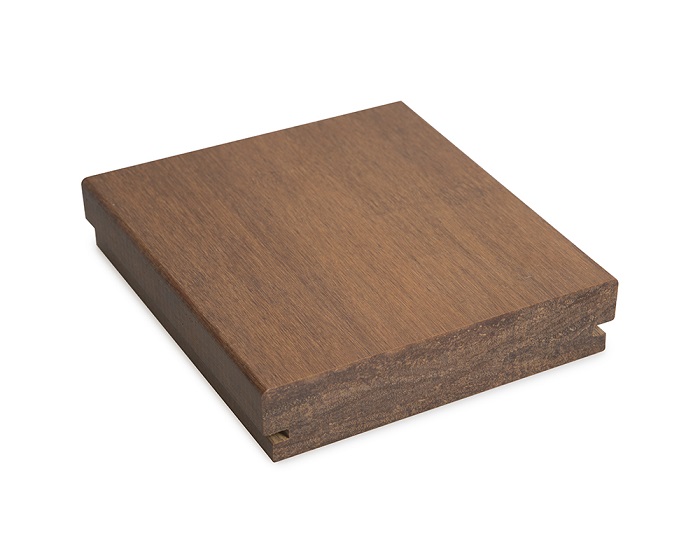
A common question in the USA market is how bamboo ages. Like all natural materials, MOSO bamboo will weather when exposed to UV light. When first installed, it typically has a deep, dark brown, "nutmeg" appearance. Over 12 to 18 months, it will gradually transition to a lighter brown and eventually to a silvery-grey patina.
For homeowners who want to retain the original color, a simple application of a penetrating oil (specifically formulated for high-density timbers) once a year is usually sufficient. Because the material does not "splinter" in the traditional sense, it remains comfortable for bare feet even after years of weathering. This lack of splintering is a significant selling point for families with children and pets.
Sustainability: A Renewable Alternative to Ipe
For decades, Ipe was the go-to for luxury American decks. However, the environmental cost of logging South American rainforests has led to increased regulation and scarcity. MOSO bamboo is a rapidly renewable resource that reaches maturity in just 5 years, compared to 50-100 years for hardwoods. Each 3050mm plank represents a carbon-negative lifecycle, as the bamboo plant absorbs more CO2 during its growth than is emitted during the manufacturing and shipping process.
Key Specifications for USA Buyers
When sourcing 3050mm length decking, USA importers and contractors typically look for the following standard configurations:
- Thickness: 20mm (approx. 3/4 inch) - The standard for structural stiffness.
- Width: 137mm to 140mm (approx. 5.5 inches) - Matches the visual scale of a standard 1x6 wood plank.
- Surface: Choice of Smooth (for a sleek look) or Reeded (for extra grip).
- Edges: Side-grooved for hidden clips and end-matched for seamless joints.
Value Proposition for Commercial Developments
In the commercial sector—think rooftop bars in New York City, boardwalks in California, or hotel terraces in Miami—the return on investment (ROI) is paramount. The 3050mm MOSO bamboo decking offers a lower Levelized Cost of Ownership. While the initial material cost may be higher than pressure-treated pine, the lack of required sanding, the 25-year lifespan, and the reduced labor during installation make it the more profitable choice for developers and property managers.
Summary of Advantages
The 3050mm length MOSO bamboo decking provides a specific set of solutions for the USA market:
- Superior Aesthetics: Long, clean lines with minimal butt-joints.
- Extreme Hardness: Resistant to the heavy wear and tear of American outdoor lifestyles.
- Environmental Responsibility: A credible, high-performance alternative to endangered hardwoods.
- Climate Versatility: Proven stability in the diverse weather patterns found across the United States.
As American building codes become stricter and consumer preferences lean more toward longevity and sustainability, the role of engineered bamboo will only grow. The 3050mm length is a testament to the industry's ability to adapt traditional materials into modern, high-tech building solutions that meet the scale and quality expectations of the USA market.
 皖公网安备 34180202000049号