

The Ultimate Eco Friendly Desktop: How Custom Bamboo Standing Desks Redefine Home Office Ergonomics
Sep 12, 2026, 11:30 AM
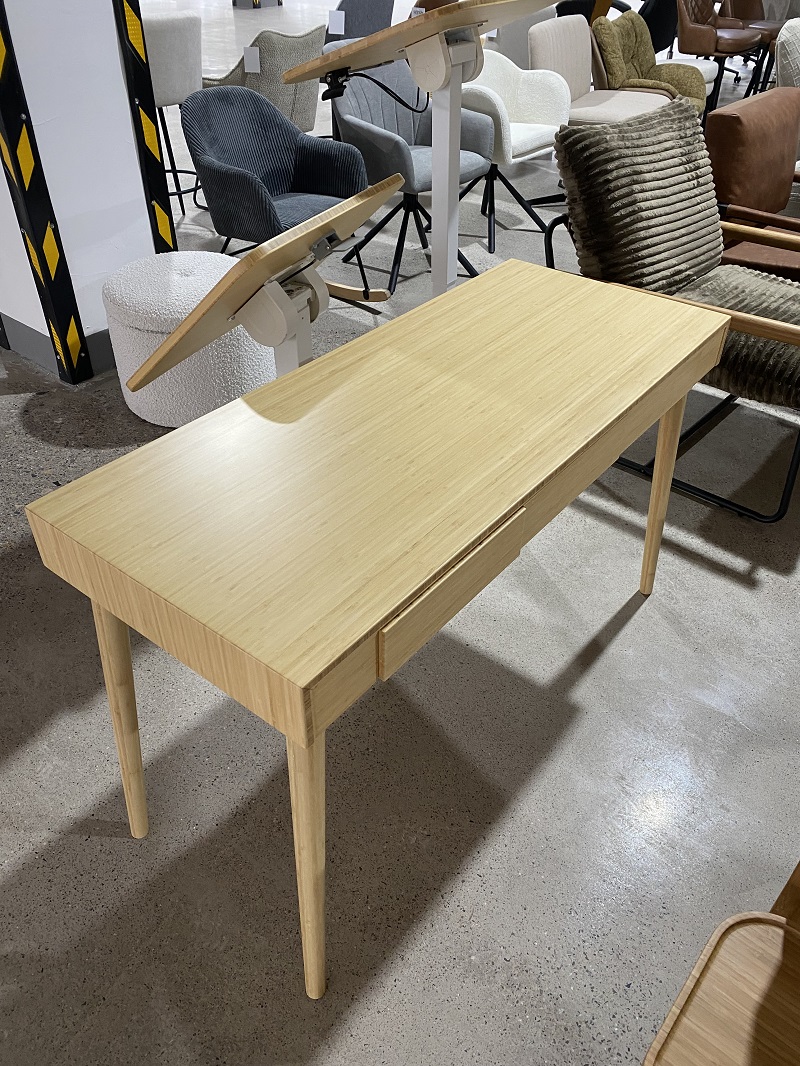
Working from home has shifted from a temporary workaround to a permanent lifestyle for millions of professionals. As remote work setups become permanent fixtures in modern houses, the focus has moved from makeshift kitchen-table workstations to dedicated, highly functional home offices. Sitting for eight to ten hours a day takes a physical toll, leading to back pain, neck strain, and overall fatigue. At the same time, professionals are becoming increasingly conscious of the environmental footprint left by disposable furniture and synthetic office gear.
This intersection of personal health and environmental responsibility has driven a massive movement toward sustainable, ergonomic office design. Among the various materials available for modern workstations, custom bamboo standing desks have emerged as the premier choice. By pairing the natural, renewable properties of bamboo with adjustable standing desk frames, professionals can build a workspace that supports body mechanics while honoring sustainable principles.
The Evolution of Modern Home Office Workstations
For decades, commercial and home offices relied heavily on mass-produced furniture made from particleboard, medium-density fiberboard (MDF), and synthetic plastic laminates. While these materials offered low manufacturing costs, they introduced several long-term problems for home environments:
- Poor Durability: Particleboard desks tend to sag under the weight of multiple monitors, heavy computer towers, and desktop accessories over time.
- Moisture Susceptibility: Spilled coffee or high humidity causes cheap engineered wood to swell, crack, and peel along the edge banding.
- Off-Gassing: Synthetic desks frequently use adhesives containing urea-formaldehyde, releasing volatile organic compounds (VOCs) into closed indoor spaces.
- Environmental Waste: Low-quality furniture is difficult to repair or recycle, ending up in landfills after just a few years of daily use.
As awareness surrounding indoor air quality and workspace longevity has grown, designers and professionals have turned toward natural alternatives. Solid hardwoods like oak and walnut offer strength, but they come with high price tags and long harvest cycles that raise sustainability concerns. Bamboo fills the gap perfectly, offering the structural integrity of dense hardwood alongside an exceptionally fast regeneration rate.
Understanding Bamboo as a Sustainable Material
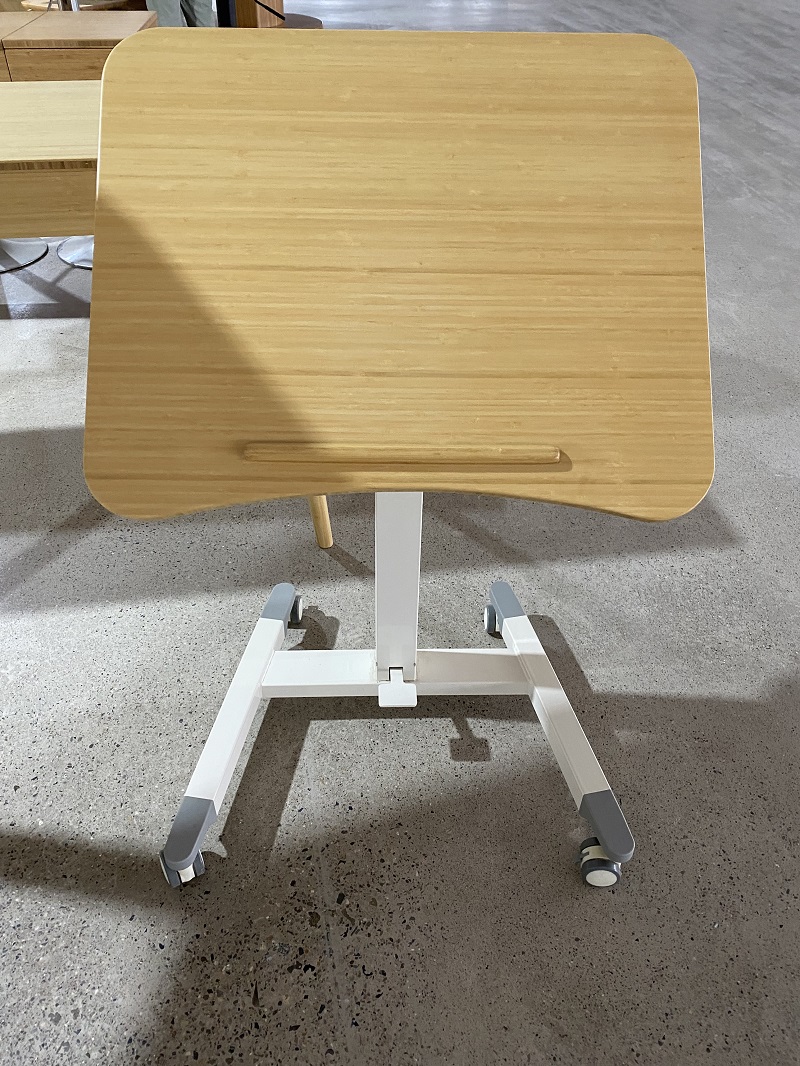
Although bamboo looks and performs like hardwood when manufactured into furniture panels, it is biologically classified as a fast-growing perennial grass. This distinction is precisely what makes bamboo one of the most environmentally responsible raw materials on the planet.
The environmental credentials of high-grade bamboo desktops rest on several natural characteristics:
- Rapid Growth Cycle: While traditional hardwood trees like oak or maple require 40 to 80 years to reach maturity, Moso bamboo reaches full structural maturity in just 3 to 5 years.
- Self-Regenerating Root Networks: Harvesting bamboo does not kill the parent plant. The underground root system, known as the rhizome, remains intact, sending up fresh shoots without requiring replanting or soil tilling.
- Carbon Sequestration: Rapidly growing bamboo groves absorb substantial amounts of carbon dioxide from the atmosphere, producing up to 35 percent more oxygen than an equivalent stand of hardwood trees.
- Minimal Chemical Input: Bamboo thrives naturally without heavy synthetic fertilizers or pesticides, preserving local soil chemistry and groundwater quality.
When processed into solid furniture panels, raw bamboo stalks are split into narrow strips, boiled to remove natural sugars, dried, and compressed under immense pressure with eco-friendly resins. The resulting bamboo desktop provides a dense, stable surface that resists warping, scratching, and daily wear better than many traditional timber options.
The Physical Toll of Static Sitting and the Standing Solution
Human anatomy is engineered for dynamic movement rather than prolonged static posture. Sitting in a standard office chair for extended periods compresses the lumbar spine, shortens hip flexors, reduces circulation in the lower extremities, and slows metabolic rates. Over weeks and months, poor posture contributes to chronic lower back issues, thoracic tightness, and repetitive strain injuries in the wrists and shoulders.
An adjustable standing desk frame breaks this static cycle by allowing users to alternate between sitting and standing effortlessly throughout the workday. Switching positions every 30 to 60 minutes offers immediate physical benefits:
- Spinal Decompression: Standing restores the natural natural curve of the spine, alleviating pressure on intervertebral discs caused by slouching.
- Enhanced Blood Flow: Alternating positions engages leg muscles, promoting healthier circulation and reducing lower-body fluid pooling and leg lethargy.
- Increased Caloric Burn: Minor postural adjustments made while standing keep core and stabilizer muscles engaged, increasing energy expenditure compared to sedentary sitting.
- Improved Mental Focus: Physical movement stimulates oxygen delivery to the brain, helping combat the mid-afternoon energy slumps common in office environments.
Why Bamboo and Ergonomics Work Hand-in-Hand
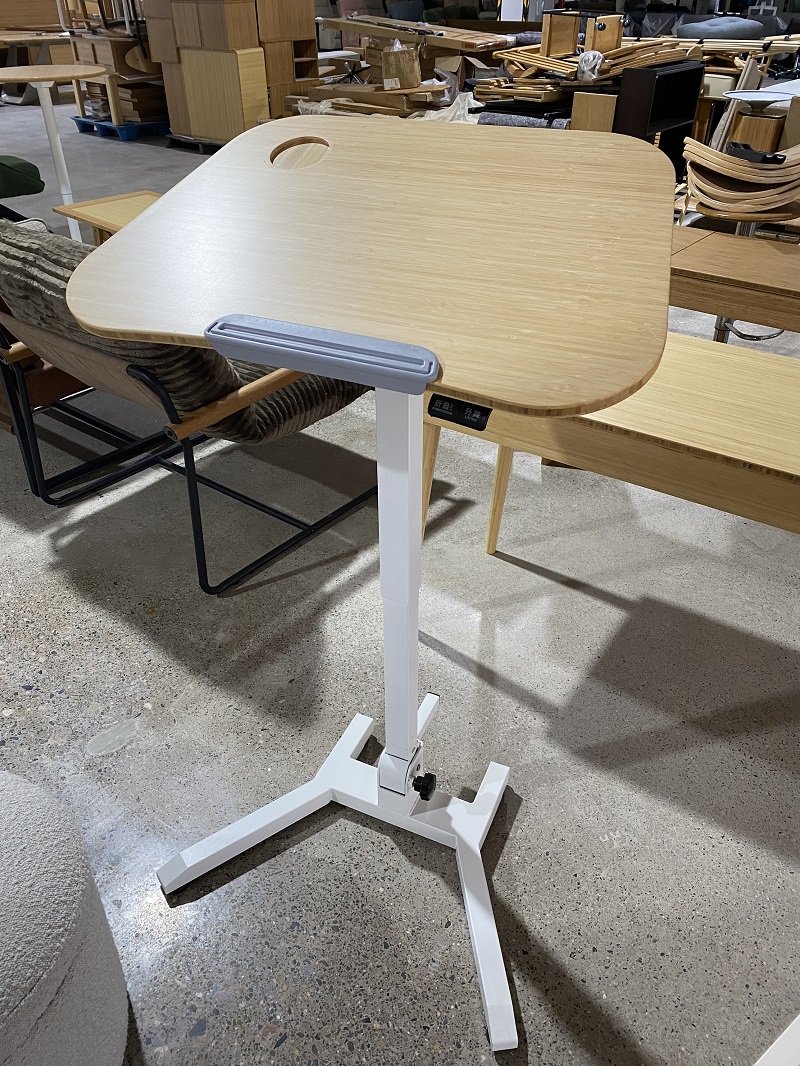
While a standing desk frame provides the mechanical height adjustments, the desktop surface is where tactile human interaction occurs. The physical properties of a custom bamboo desktop contribute directly to a comfortable, ergonomic working experience.
Smooth, Tactile Edge Profiles
Traditional laminate desktops often feature sharp, 90-degree plastic edge banding that digs into the forearms and wrists during typing. Solid bamboo panels can be precision-machined with softened micro-bevels, bullnose edges, or smooth chamfers. A rounded desktop edge reduces pressure on the ulnar and median nerves in the forearms, preventing numbness and long-term wrist fatigue during long typing sessions.
Custom Dimensions for Optimal Reach Zones
Ergonomics is not a one-size-fits-all discipline. A tall worker using three large monitors requires a completely different desk footprint than a writer using a single laptop. Ordering a custom bamboo desktop allows individuals to select the precise width, depth, and thickness suited to their specific equipment and room scale.
A properly scaled desk surface ensures that essential items stay within the neutral reach zone—the arc formed by extending the arms without bending at the waist or straining the shoulders. Deep custom desktops allow monitors to be set back at an ideal focal distance of 20 to 30 inches, protecting the eyes from strain and reducing head tilt.
Natural Acoustic and Tactile Comfort
Synthetic desks often feel cold, hard, and reflective, echoing keyboard clatter and mouse clicks around a small room. Bamboo possesses natural cellular density that absorbs subtle vibrations and offers a warm, comfortable feel against bare skin. The result is a quieter, less visually distracting home office environment that fosters deep concentration.
Grain Patterns and Custom Aesthetics
A home office workstation should look as good as it performs. A custom bamboo desktop adds organic warmth to modern interior spaces, softening the industrial look of monitor arms, metal standing frames, and electronic wires. Because of how bamboo panels are manufactured, buyers can select from distinct grain patterns and color finishes to suit their decor.
Horizontal Bamboo Grain
Horizontal bamboo panels are constructed by laying wide strips flat side-by-side before pressing. This technique showcases the natural bamboo nodes—often referred to as knuckles—at regular intervals across the surface. Horizontal grain offers an authentic, organic pattern that visually identifies the material as natural bamboo, working exceptionally well in Scandinavian, modern tropical, or casual minimalist rooms.
Vertical Bamboo Grain
Vertical bamboo panels are made by turning narrow bamboo strips on edge before pressing them together under high pressure. The surface reveals a fine, linear pinstripe pattern with subtle node markings. Vertical grain provides a clean, uniform, and architectural appearance that blends seamlessly into sleek, modern, or executive home offices.
Color Variations: Natural vs. Carbonized
Custom bamboo desktops are generally available in two primary finishes achieved without synthetic dyes or heavy stains:
- Natural Blonde: The raw bamboo retains its pale yellow, birch-like tone, creating a bright, airy aesthetic that reflects ambient light well in smaller rooms.
- Carbonized (Caramelized): The raw bamboo is pressure-steamed, caramelizing the natural sugars within the plant fibers. This turns the material a rich amber brown throughout its entire depth, mimicking warm hardwoods like teak or walnut.
Configuring an Ergonomic Bamboo Workstation Step-by-Step
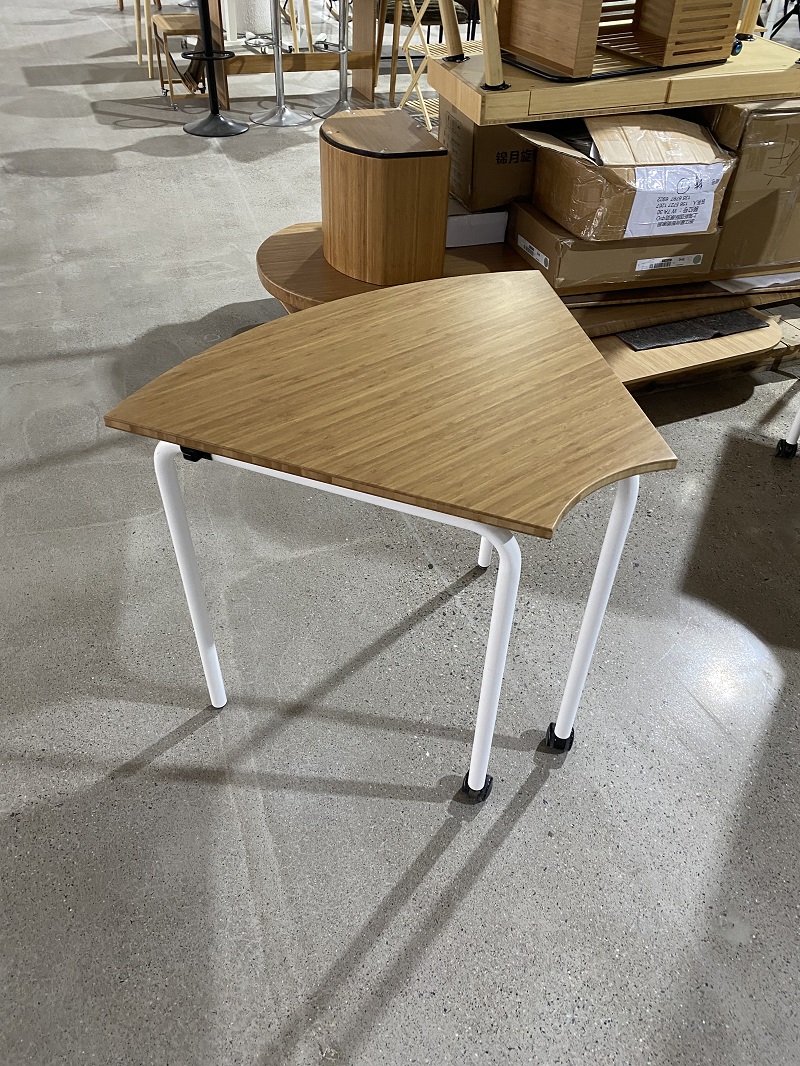
Building a fully optimized bamboo standing desk setup requires careful pairing of the custom tabletop with high-performance ergonomic accessories. Follow this step-by-step approach to construct a balanced workstation:
Step 1: Choose a Stable Motorized Standing Frame
Pair your custom bamboo top with a dual-motor electric standing frame. Dual motors provide smooth, quiet height adjustments and higher weight capacities, ensuring the desk does not wobble when loaded with computer hardware. Look for frames featuring memory presets so you can return to your exact seated and standing elbow heights with a single button press.
Step 2: Position the Desktop Surface Correctly
Adjust the desk height until your elbows form a 90-to-100-degree angle while your shoulders remain completely relaxed. Your forearms should rest flat on the softened bamboo edge without hunching your shoulders or bending your wrists upward.
Step 3: Mount Monitor Arms for Neck Alignment
Avoid placing monitors directly on the bamboo surface on their stock stands, as this forces you to tilt your head downward. Instead, attach an adjustable monitor arm to the back edge of your custom bamboo desktop. Position the top line of the screen at or slightly below eye level, maintaining an arm's length distance from your seat.
Step 4: Integrate Cable Management Solutions
A cluttered workspace induces mental fatigue and presents physical hazards when transitioning between sitting and standing heights. Custom bamboo desktops can be ordered with pre-drilled cable grommets or fitted with undersurface cable trays. Routing wires cleanly along the underside of the bamboo panel preserves the clean lines and natural beauty of the wood grain.
Long-Term Maintenance of Bamboo Desktops
Solid bamboo desktops are resilient, but simple routine maintenance keeps them in peak condition for decades. Preserving the smooth finish and natural grain requires minimal effort:
- Regular Cleaning: Wipe the surface with a soft, lint-free microfiber cloth lightly dampened with warm water and a mild, neutral soap. Avoid harsh chemical sprays, bleach, or abrasive scouring pads.
- Moisture Control: Use coasters under cold drinks and hot coffee mugs to prevent surface ring marks and finish discoloration. Clean up liquid spills immediately to protect the protective coat.
- Sunlight Protection: Position the desk away from direct, harsh sunlight to avoid uneven fading or localized drying of the protective seal over time.
- Conditioning: If your bamboo desktop features a natural oil or wax finish, apply a high-quality furniture wax or food-grade mineral oil once or twice a year to maintain moisture balance and grain depth.
Sustaining Health and Environment in the Home Workspace
Investing in a workspace is ultimately an investment in long-term health, daily productivity, and personal well-being. The modern home office does not need to compromise between physical comfort and environmental integrity.
By bringing together the strength, beauty, and rapid sustainability of custom bamboo desktops with dynamic standing desk mechanics, professionals can build an inspiring environment tailored to their exact physical requirements. A custom bamboo standing desk serves as a durable, functional, and eco-conscious foundation that supports healthy working habits every single day.
 皖公网安备 34180202000049号