

Why Ergonomic Bamboo Desktops Beat Traditional Laminate Surfaces
Sep 12, 2026, 11:30 AM
Work environments have changed permanently over the past decade. With millions of professionals shifting from corporate cubicles to home offices, the focus on workspace setup, posture health, and material quality has reached an all-time high. The desk serves as the anchor for daily productivity, holding monitors, keyboards, documents, and coffee cups for eight to twelve hours a day. Yet, many home office setups still rely on cheap, mass-produced laminate desktops that sacrifice long-term durability and physical comfort for low initial costs.
Selecting the right desk surface involves evaluating physical mechanics, tactile comfort, structural resilience, and long-term value. While traditional high-pressure laminate surfaces have dominated the budget office furniture market for decades, natural bamboo surfaces are rapidly taking over. Solid bamboo desktops engineered with ergonomic features provide a superior work experience across every measurable metric. Understanding the structural and physical differences between laminated particle board and solid fused bamboo helps professionals build a healthy, durable, and inspiring workspace.
Understanding Desk Surface Materials: Bamboo vs. Laminate
To evaluate why bamboo outperforms plastic laminate, it helps to examine how both materials are constructed.
Traditional Plastic Laminate Desktops are composed of compressed particle board or medium-density fiberboard (MDF) wrapped in a thin decorative paper layer and sealed with a clear melamine resin coating. The core material consists of wood chips, sawdust, and synthetic glues pressed together under heat. While laminate offers a uniform appearance and basic water resistance when brand new, the core material remains soft, porous, and vulnerable to impact damage and moisture penetration over time.
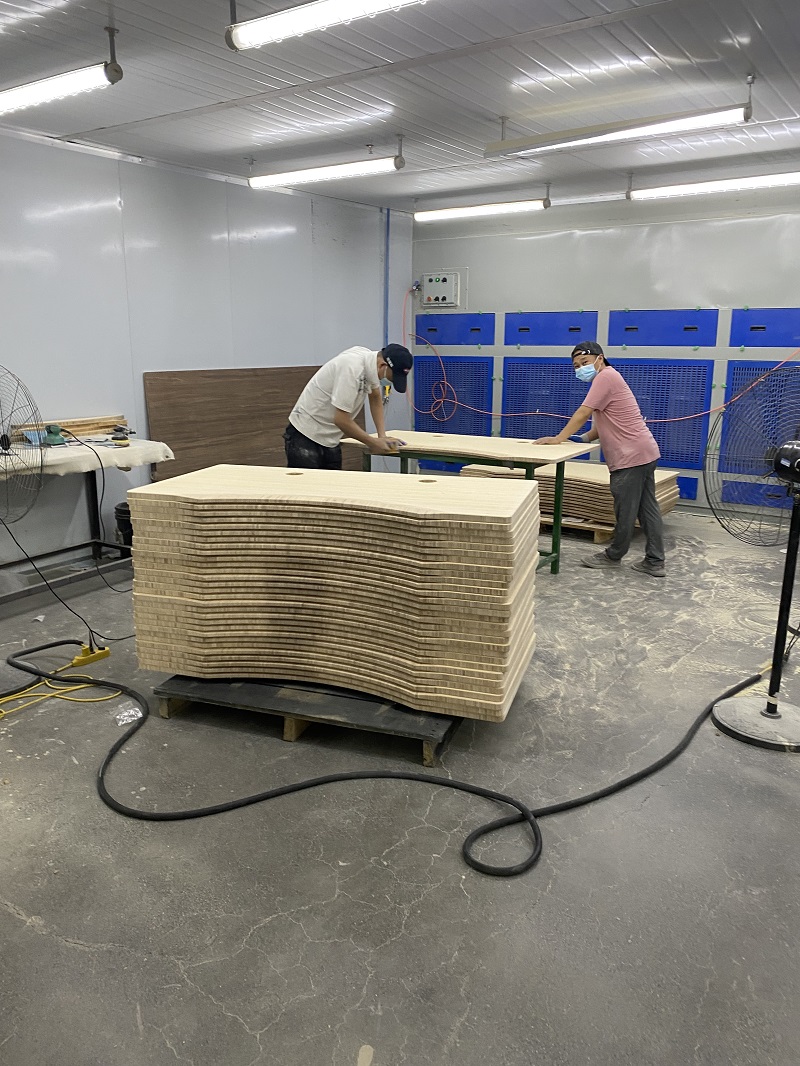
Engineered Bamboo Desktops utilize mature Moso bamboo stalks harvested at peak density. The bamboo culms are sliced into uniform strips, kiln-dried to balance moisture content, and hot-pressed under extreme hydraulic pressure using eco-friendly adhesives. This lamination process creates a multi-layered solid desktop with structural strength that rivals traditional hardwoods like oak and maple while offering exceptional dimensional stability.
- Material Density: Fused solid bamboo features a tensile strength exceeding mild steel and a Janka hardness rating higher than white oak, whereas particle board laminate crumbles under concentrated point loads.
- Core Integrity: Bamboo desktops are solid material through the entire thickness, allowing for contoured, beveled, and ergonomic edge shaping. Laminate desktops feature sharp plastic PVC edge banding glued over raw particle board edges.
- Surface Feel: Bamboo provides a warm, natural tactile texture that absorbs ambient room temperature, whereas synthetic melamine laminate feels cold, hard, and non-porous under skin contact.
The Ergonomic Advantage: Contoured Bevels and Forearm Relief
Ergonomics extends far beyond adjustable chair height and monitor arms. The physical interface where an employee's arms and wrists contact the desk edge plays a critical role in preventing repetitive strain injuries, forearm muscle fatigue, and nerve compression.
The Problem with Sharp Laminate Edges
Standard laminate desktops are manufactured with flat, 90-degree squared edges capped with rigid PVC plastic edge strips. When typing or using a mouse for extended periods, the hard, sharp corner of a squared desk acts as a focal point for mechanical pressure against the undersides of the forearms and wrists.
Continuous contact against a sharp 90-degree edge restricts local capillary blood circulation, pinches the ulnar and median nerves, and leads to discomfort commonly mistaken for general fatigue. Over months and years, this constant pressure increases the risk of developing carpal tunnel syndrome, cubital tunnel syndrome, and tendonitis.
Ergonomic Shaping on Solid Bamboo
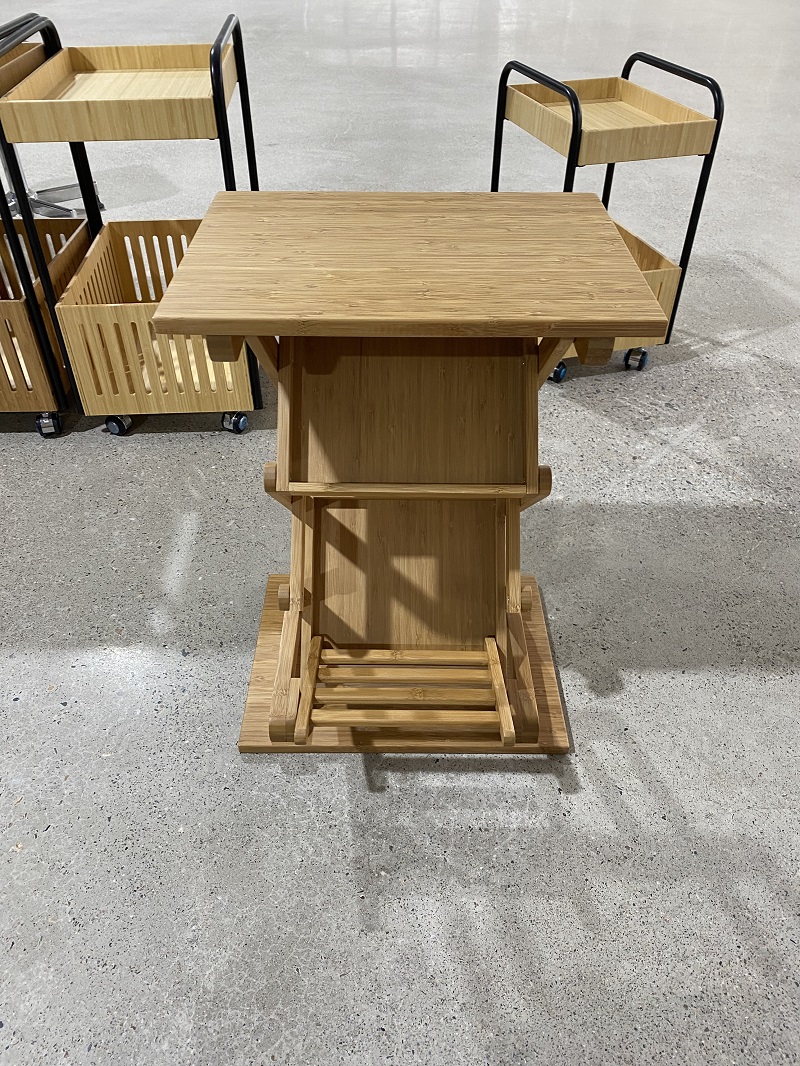
Because engineered bamboo is a solid material throughout, manufacturers can carve, route, and bevel the desktop edges into smooth ergonomic contours. High-end bamboo desktops feature custom front edge profiles designed specifically to support human anatomy:
- Ergonomic Beveled Edges: A 45-degree or cascading soft curve along the front edge spreads forearm contact pressure across a wider surface area, maintaining healthy blood circulation during long typing sessions.
- Concave Front Cutouts: Precision-milled front curves allow the user to sit closer to the workspace, bringing monitors and keyboards into natural reach without forcing shoulder protraction or upper back slouching.
- Smooth Rounded Corners: Beveled outer corners eliminate sharp points, preventing accidental impact injuries in tight home office layouts.
Plastic laminate surfaces cannot accommodate these ergonomic edge contours. Routing a curve into a laminate desktop exposes the raw, crumbly particle board underneath, rendering edge shaping impossible on budget laminate furniture.
Durability and Environmental Resistance Compared
A home office desk represents a multi-year investment. Evaluating long-term durability under daily wear, accidental liquid spills, and heavy hardware equipment illustrates the severe limitations of plastic laminate.
Moisture Damage and Delamination
Liquid spills are inevitable in any active work area. When water or coffee spills onto a laminate desk, the liquid quickly seeks out seam lines between the top melamine paper and the glued PVC edge banding. Once moisture penetrates the outer laminate shell, the inner particle board core absorbs the water like a sponge. The wood chips swell permanently, causing the laminate top to bubble, warp, and peel away—a destructive process known as delamination that cannot be repaired.
In contrast, solid bamboo desktops are treated with protective polyurethane or natural oil finishes that seal the dense grain against moisture penetration. Even if a deep scratch occurs, the solid bamboo underneath will not swell or crumble, ensuring structural stability throughout decades of use.
Scratch, Dent, and Load Resistance
Heavy multi-monitor arm mounts, heavy printer units, and desktop computer towers exert immense point pressure on desktop surfaces. Cheap laminate surfaces frequently bow or crack under heavy dual-monitor clamps because the inner particle board lacks tensile strength. Clamp mounts often crush the hollow or low-density core of laminate tops.
Solid bamboo possesses incredible natural flexibility and compression resistance. Dual-monitor arms and heavy desktop equipment can be securely clamped anywhere along a bamboo surface without fear of structural cracking, crushing, or permanent sagging.
Aesthetic Warmth and Biophilic Workspace Design
The visual and tactile environment of a workspace directly influences stress levels, focus, and creative productivity. Environmental psychology highlights the benefits of biophilic design—the practice of incorporating natural materials, organic textures, and natural lighting into built environments.
Plastic laminate desktops feature artificial printed wood grain patterns or sterile solid white and gray plastic coatings. These artificial surfaces lack depth and warmth, contributing to a cold, sterile, and corporate visual environment.
Bamboo brings authentic natural warmth into the office space. Each bamboo desktop features unique grain variations, subtle node patterns, and rich natural amber tones achieved through thermal caramelization. The organic tactile feel of smooth bamboo underfoot or underhanded creates a calming, grounded atmosphere that reduces work-related fatigue and enhances daily focus.
Architects and interior designers frequently specify natural bamboo over synthetic composites when building modern residential offices because bamboo seamlessly bridges the gap between commercial functionality and residential warmth.
Environmental Sustainability: Fast-Growing Grass vs. Synthetic Resins
For environmentally conscious buyers, the ecological footprint of office furniture is a critical decision factor. Comparing the raw material life cycles of bamboo and synthetic laminate highlights a dramatic environmental difference.
The Ecological Impact of Laminates
Plastic laminate manufacturing relies heavily on petrochemical resins, formaldehyde-based glues, and wood fibers harvested from slow-growing timber forests or industrial sawmills. Recycling laminate furniture at the end of its life cycle is nearly impossible because the synthetic glues, plastic PVC edgings, and wood fibers cannot be easily separated, resulting in tons of non-biodegradable waste in municipal landfills.
The Sustainable Bamboo Advantage
Bamboo is not a hardwood tree; it is a fast-growing species of giant grass. This fundamental botanical distinction makes bamboo one of the most renewable structural materials on earth:
- Rapid Regeneration: While traditional hardwood trees like oak take 40 to 80 years to reach maturity, Moso bamboo grows to full structural maturity in just 3 to 5 years.
- Self-Sustaining Root Systems: Harvesting bamboo does not kill the parent plant. The extensive underground rhizome root system stays intact, shooting up new stalks naturally without requiring replanting, soil tilling, or chemical fertilizers.
- Carbon Sequestration: Bamboo forests absorb up to four times more carbon dioxide and release 35% more oxygen than equivalent stands of hardwood trees, actively mitigating atmospheric carbon during its growth cycle.
Upgrading to a solid bamboo desktop supports sustainable forestry practices while eliminating toxic off-gassing associated with low-quality particle board glues.
Comparing Long-Term Cost and Value
While budget laminate desks feature a lower initial purchase price, a realistic cost analysis must account for replacement frequency and daily operational comfort.
Cheap laminate desks often show visible wear, edge peeling, sagging, and surface scratching within two to three years of daily use, forcing professionals to replace the entire desk unit. Over a ten-year career, replacing cheap laminate desks multiple times costs significantly more than investing in a high-quality surface upfront.
A solid engineered bamboo desktop represents a buy-it-for-life product. Should a bamboo desk incur surface scratches after years of intense use, the solid wood can be easily sanded down and refinished with natural wood oil, restoring its factory-fresh appearance instantly. Paired with an adjustable standing desk frame, solid bamboo delivers decades of ergonomic support, healthy posture alignment, and timeless aesthetic value.
Prioritizing physical health, material sustainability, and structural performance makes the choice clear. Solid ergonomic bamboo desktops provide the ideal surface for modern professionals seeking a healthier, more productive home office environment.
 皖公网安备 34180202000049号